Student app
Students write structured questions and remain inside the app.
Working nowProf. Dr. Conte's trusted course knowledge
Write to Prof. Dr. Conte directly inside this app. Your question enters his protected inbox, where he can review it and publish an approved answer.
Verified course knowledge
Search answers personally reviewed and published by Prof. Dr. Conte.
How Prof. Dr. Conte's assistant works
His students ask on the web or through an approved WhatsApp number. The university-hosted system retrieves only from his trusted course notes, prepares a draft, and waits for his review.
Students write structured questions and remain inside the app.
Working nowEvery submitted question appears immediately in Prof. Conte's protected dashboard.
Markdown and Obsidian notes stay on the university-controlled server.
Working nowThe message enters the same professor inbox with its original channel.
The system cites the course files it used and abstains when evidence is insufficient.
The professor sees the question, retrieved sources, and an editable draft.
The professor edits, rejects, archives, or explicitly approves the answer.
Approved answers can enter the FAQ and, for WhatsApp questions, return to the same chat.
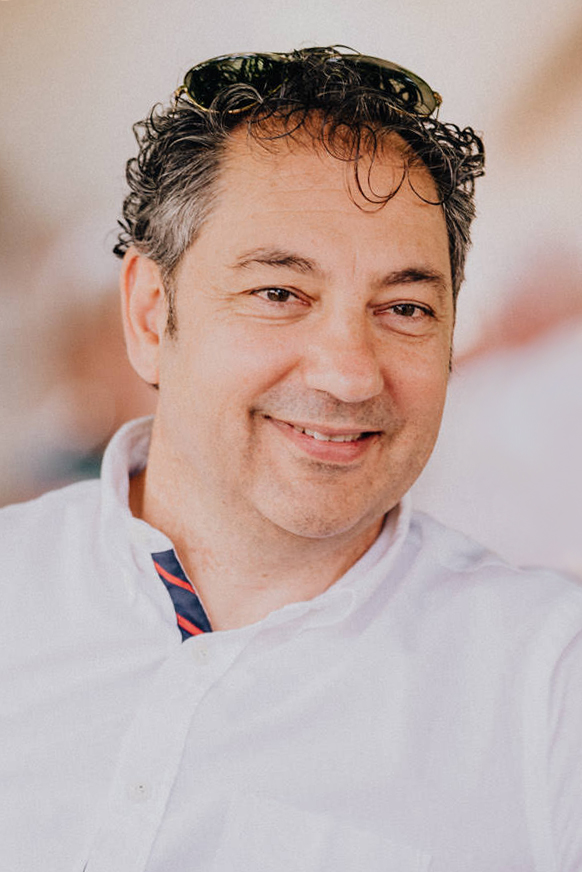
Built for Prof. Dr. Conte
His dashboard shows evidence, channel, delivery state, WhatsApp connection, and audit history. Profile information and portrait come from the official THA profile.
August 2026 research sprint
The THA Q&A Hub is evaluated as a privacy-aware, human-in-the-loop retrieval assistant—not an autonomous professor. Every draft remains reviewable and unpublished until a professor approves it.
Technical feasibility demonstrated. Human effectiveness, legal readiness, and production WhatsApp reliability still require institutional evaluation.
Research question
The study separates retrieval quality, unsupported-question abstention, answer grounding, human editing effort, usability, privacy, and operational risk.
Key finding
The original keyword retriever found superficially related passages for five of six unsupported questions. A documented evidence threshold and transparent synonym handling eliminated those failures on the 15-case development benchmark. Because the intervention followed baseline inspection, the perfect guarded result is not proof of generalisation.
What is proven
What is not proven
Research framework
Grounded in primary RAG research and authoritative GDPR, EU AI Act, EDPB, NIST AI RMF, and OWASP guidance. Legal classification remains the university’s responsibility.
Prof. Dr. Conte's protected workspace
Review his students' questions, inspect sources, approve answers, and control WhatsApp delivery.
Prof. Dr. Conte's workspace
Mechanical and Process Engineering · THA
Open questions
Drafts ready
Published
From WhatsApp
WhatsApp connection · +43 660 4168680
The bridge status will appear here.
On the approved phone: WhatsApp → Linked devices → Link a device.
Recent activity
Loading activity…
Select a question to review it.